Lesson 1: Early Social Skills and Babble
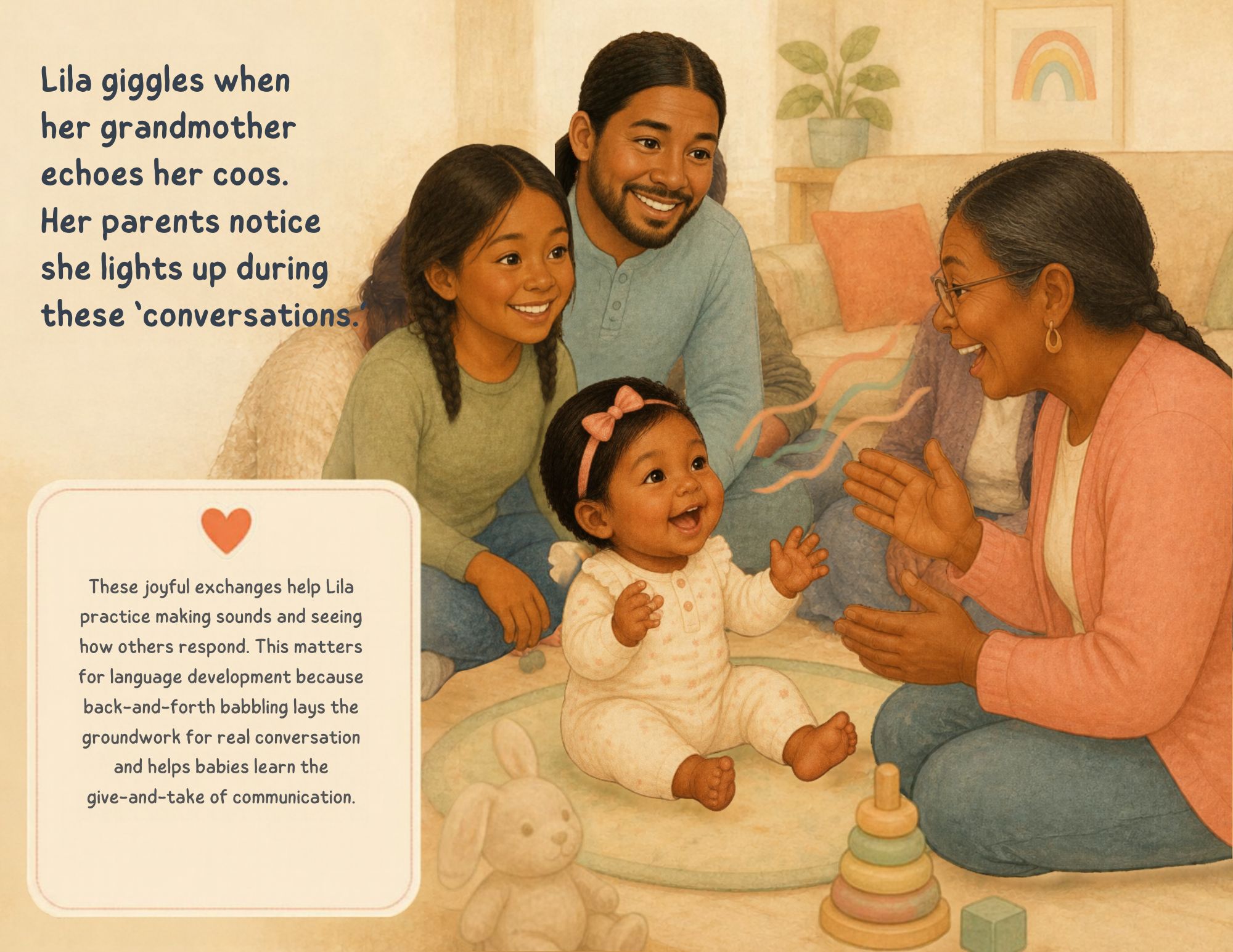
Lila giggles when her grandmother echoes her coos. Her parents notice she lights up during these “conversations.” These joyful exchanges help Lila practice making sounds and seeing how others respond. This matters for language development because back-and-forth babbling lays the groundwork for real conversation and helps babies learn the give-and-take of communication.
Aims:
Foster social responses and lay the foundation for communication.
Goals:
- Support responding to familiar voices.
- Encourage babbling and cooing.
Objectives:
- Smile or move in response to voices.
- Make sounds when spoken to or smiled at
Transformation:
Your baby shifts from reacting to initiating sounds and expressions.
Foundation:
Babies are naturally social and crave interaction.
What Happens Next:
Babbling and back-and-forth “conversations” begin.
Skill Progression:
- Smiling, cooing, social vocalizing
Activities List:
- Echo your baby’s coos and babbles—pause and wait for a response.
- Smile and talk, waiting for your baby’s reaction.
- Use a mirror for face-to-face play; point to and name features (“There’s your nose!”).
Materials:
Your voice, mirror, soft music
Differentiation:
- For less vocal babies, exaggerate facial expressions.
- Use gentle touch for babies who respond more to touch.
Integration:
- Narrate getting dressed (“We’re putting on socks!”).
- Pair touch with talking (“Tickle, tickle!”).
Parent Simulation Tip:
Copy your baby’s sounds and expressions. Watch for their reaction and keep the back-and-forth going!
Interactive Activities:
- Individual: Mirror play and babble echo
- Group: Family “sing-along” with baby at the center
Activity Pack: Please print the accompanying activity pack for this lesson.